
Introduction: “But I’m Not Actually Alone…”
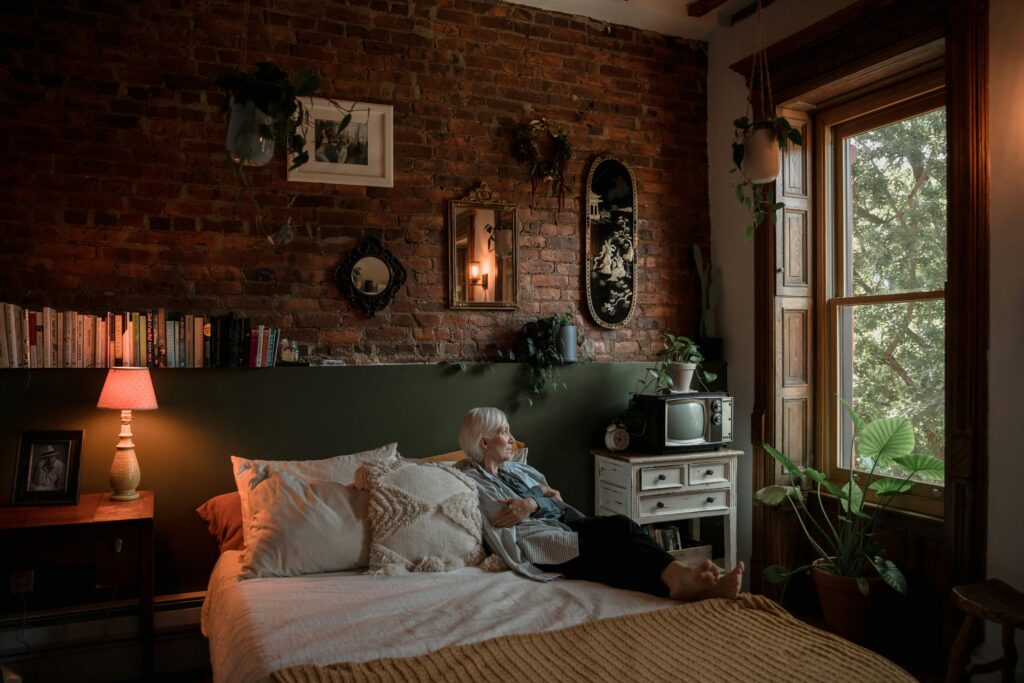
I guess when we think of loneliness, we can believe that loneliness stems from not being around people. Being on our own. This, certainly, can be the case, but have you considered that you can also be lonely even in the company of others?
Loneliness in retirement can be confusing. You may have a partner, family close by and friendly neighbours. All looking good then. So when a quiet sense of loneliness starts to drift in, it can feel confusing, perhaps uncomfortable. Yet, feeling lonely in retirement, even when you are not physically alone, is far more common than people realise. So why might this be the case? Usually, it is because something important has shifted – and your inner world is trying to get your attention. Let’s look at this in more detail, and importantly, develop some solutions to deal with this.
Loneliness Isn’t Just About Being Alone — It’s About Feeling Connected
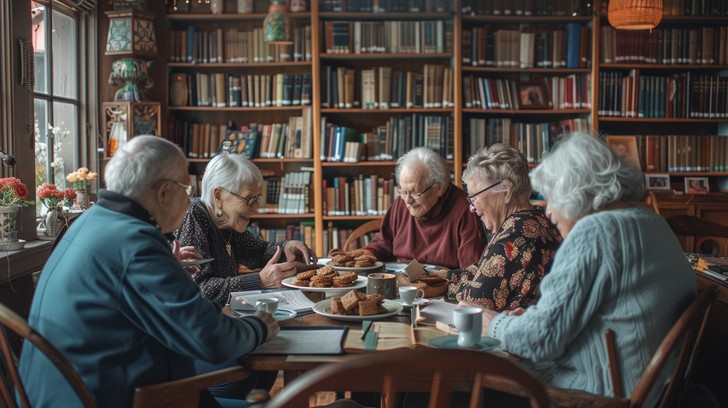
In life, we connect with others. We build up some good friendships, have good relations with colleagues at work, and might have friendly chats with our neighbours (if your neighbours are friendly, that is). But even with this, we can still feel a sense of loneliness, both during our working life and into retirement. In reality, loneliness is about the quality of connection, not the number of people that are around you.
You can feel lonely in the following situations:
- sitting next to someone on the sofa
- attending social gatherings
- chatting regularly with friends or family
Have any of you ever experienced this?
If those interactions don’t provide emotional depth, shared understanding, or a sense of being truly seen, loneliness can still exist. I suppose what I am saying here is that not all conversations need to have considerable depth. I mean, if we all spent our time discussing the meaning of life, or indeed quantum mechanics (nope, me neither), life would be, well, pretty dull. We need to have light, perhaps throwaway conversations to mix things up. But it could be that when these simplistic chats, which don’t have too much meaning behind them, become commonplace, this is when a feeling of isolation could present itself.
When You Feel Unseen or Unheard
Another common cause of loneliness is the feeling of no longer being fully noticed. After retirement, people may:
Ask fewer questions about your day.
Assume you’re ‘fine’ now. After all, you’ve got all this spare time – surely everything must be going swimmingly well for you now? If only.
Talk more about their lives than yours. Certainly not a phenomenon linked to retirement, that’s for sure!
I imagine scenarios such as the above could be less common if you have a varied and full life, taking part in different activities – people will have more to talk to you about then. But it’s not a person’s fault if they don’t have this. They may have dedicated their adult life to their job, to help create a good quality of life for themselves and their family. Nothing wrong with that, of course. But this could lead to others struggling to find that connection, that way into a conversation.
This isn’t necessarily anyone’s fault, and likely will not be intentional. But it can still hurt. Feeling unseen is a powerful contributor to loneliness, especially in later life, when identity and roles in life are shifting.
Loneliness Within Relationships and Couples
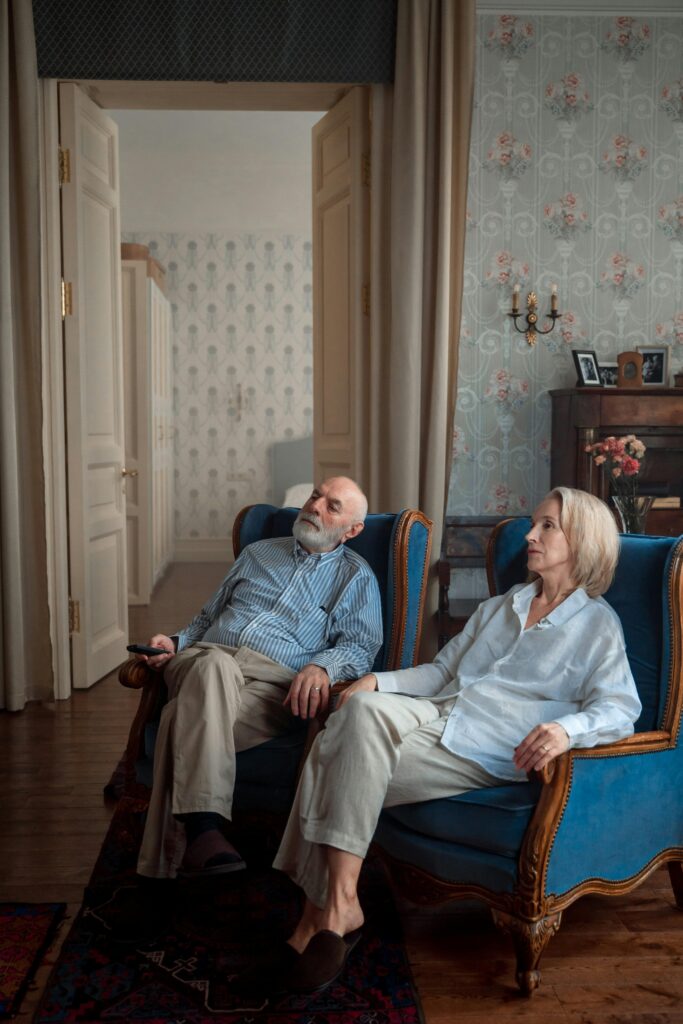
I have listened to many podcasts and read countless blogs on loneliness in retirement, and what stands out for me is that there isn’t a huge amount of conversation around how loneliness can exist in close relationships. A future blog post of mine will be looking at how couples can navigate retirement together, where I will explore this deeper.
As we know, with medical advancements, we are now living longer. Good stuff. This means that our retirement will, of course, be longer. More good stuff. But it also means there is a greater chance of relationship difficulties, fallouts and more. Not such good stuff.
Couples in retirement could experience loneliness for a number of reasons. Repetitive days, the disappearance of shared goals, and conversations perhaps lacking the depth they used to have, with more mundane, repetitive conversations perhaps making an appearance. This doesn’t mean the relationship is falling apart, or that your love for each other is any less. It just means you may need to reconfigure certain aspects, find new sources of meaning, and develop new activities, both together and separately. Hugely important that – together and separately – and again something I will touch upon in a future post.
Relationships always need work, not just in retirement but throughout life. You will likely be spending more time together than ever before. That is bound to cause friction – so expect it. But the friction itself isn’t the problem -it’s how you work through things together. Good communication, empathy, and a genuine understanding of your loved one are just a few ways you can make things work. All relationships are different – I appreciate that – but if you’ve had a strong marriage up until the point of retirement, don’t let spending more time together be the thing that breaks it up. That, I believe, would be such a shame.
So we’ve talked about some of the reasons why loneliness can exist, even in the company of others. So let’s move on to some solutions. We recognise that this is a real problem for some, so if we encounter this problem, we need to seek some answers. Great. Let’s take a look at some ideas.

Redesigning The Conversations You Have
Conversation. Having a chin-wag. It’s such an important aspect of life, isn’t it? Words are how we navigate ourselves through life, and the quality of our words, I think, shapes the quality of our lives. And that includes our relationships with others. As we’ve mentioned, post-retirement conversations can become all too practical, routine and focused on the mundanity of life. It is important to know if the bin has been put out for recycling, but if this becomes the main talking point of the week, then perhaps a rethink needs to happen.
We can gently shift this by making a few changes.
First of all, consider asking more reflective questions. What I mean by this is questions that are open-ended, those that don’t elicit just a yes or no answer. But not just that. Reflective questions can delve into your own, and indeed into others’ values. What’s important to you? What’s important to your family and your friends? Reflective questions dig a little deeper. You’re not lingering around the superficial here, but rather trying to understand what makes you or others tick. Better, I think, than continually chatting about whether brown sauce or ketchup is better on a bacon buttie. Ooh, just think I’ve found another idea for a blog post.
Whenever I think of the word ‘curiosity’, it brings back memories of that 80s UK pop band Curiosity Killed The Cat. Quite a down-to-earth bunch they were. Sorry! Anyway, showing curiosity in others is a sure-fire way of sparking some good conversations. People love talking about themselves. And I always find this type of conversation so much easier. Ask a question about something that you know helps you connect with that person (it could be their family, one of their hobbies, last holiday they went on) and let them do the talking. You can keep the flow of conversation going by good active listening, then see where you take the conversation next. They do the hard work, you find the questions to ask. It’s one method to explore.
Talking about how you feel, the struggles you are facing.
I think that it’s sad that sometimes we feel we shouldn’t share our own trials and tribulations with others. I get it. We sometimes feel we don’t want to burden others, or become labelled as the person who is always complaining. But it doesn’t have to be that way. Yes, if we are continually negative, then others might pull back from us. But if we keep a good sense of balance, talking about our struggles whilst also showing curiosity (as mentioned above), and having other empowering conversations, then why shouldn’t we share our difficulties every now and again? People close to us, those we have forged strong connections with over the years, will want to listen. To help. To show empathy and understanding. Don’t be afraid to talk about the challenges you are facing. They are real challenges, and others will be more than willing to share their own ideas on how you might overcome them.
Reclaiming A Sense of Being Valued
One of the biggest contributors to loneliness in retirement is the feeling of no longer being important to anything or anyone.
Work often made our contribution visible. Retirement can make it seem, well, invisible.
To reduce loneliness, consider asking yourself the following questions:
- Where do I still make a difference?
- Can I find new ways of making a difference? (hint – you can)
- Where is my experience genuinely useful?
- What do people come to me for?
- Which conversations leave me feeling more energised, rather than drained?
- Where do I still feel useful or needed?
- What could I do this week to make me feel like I’m contributing?
There are, of course, many more questions we can ask. I like asking questions. When we ask questions, especially ones such as the above that allow us to think about our own contributions in life, we can generate some answers. If we don’t ask the questions, we get no answers. When we think about what impact we can have on others in life, we increase the chance of exhibiting the behaviours to make that happen. It’s simple. We don’t think about it – we don’t do it. We do think about – we might just do it. Maybe this is a time to think about Nike’s slogan that has served them well for many years now.
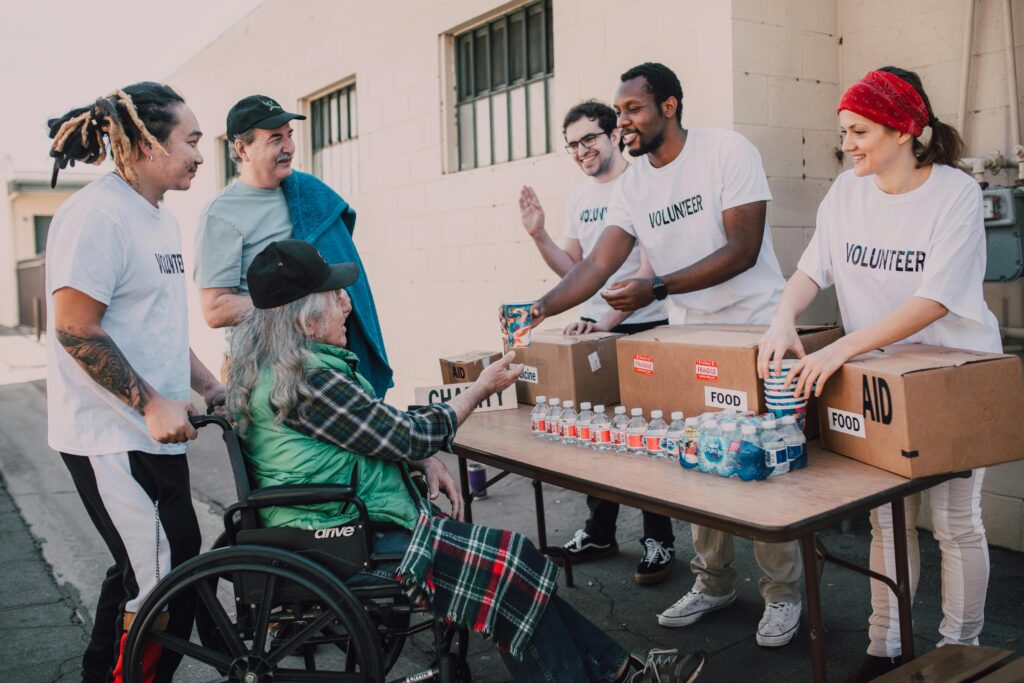
As the image above shows, we see a group of people volunteering. This is one way of building good social connections in life, contributing to something bigger than yourself, making a difference in this world and much, much more. It’s food for thought. You are back working again, but on your own terms, and perhaps doing activites that derive more meaning for you. One way of reducing that sense of loneliness and redesigning this next segment of your life.

Letting Go of “How Retirement Should Look”
We can sometimes fall into the trap of looking at others and think they have nailed life. Everything looks so perfect. And for some, a few, maybe it is. But I would suggest that the perceptions you have, and what you sometimes see on social media, may not always be the full truth of a person’s life. Take this couple in the picture. They look happy, playing their virtual reality game, but after this shot was taken, they entered a heated argument about the husband using the last of the loo rolls. Cue several hours of silence and accusing looks. Disclaimer – I made the last few sentences up – please don’t sue me!
Okay, back to being serious. We can look at others, compare our own lives to theirs, and form our own judgements. I don’t think we should be doing that. I think we should compare our own life today to what it was the previous day, or the week or month before, and seek to make our own improvements. That is fully in our control. Other people’s lives are not.
So when it comes to feelings of loneliness, we may look at others and think that’s not an issue for them. The reality is, we don’t truly know. It may or may not be. What we should do is work on ourselves, not try and keep up with the Joneses. No other person or family in life have the ‘template’ of how to connect with others, so comparing ourselves to others, I think, is futile. Work on yourself – you can control that. Keeping up with the Joneses, whoever this seemingly lucky family are that have got it all, isn’t worthwhile. And from what I’ve heard, the Joneses are always falling out over little Johnny always shirking his family vacuuming responsibilities. Causes outrage in the house. Maybe we don’t need to keep up with the Joneses after all.

Final Thoughts: Connection Comes from Meaning
If you feel lonely in retirement despite being around people, you’re not failing — you’re noticing something important.
This kind of loneliness isn’t about absence. It’s likely about meaning, contribution, and being seen.
By gently redesigning your retirement to include:
- deeper conversations
- meaningful roles
- a sense of value and purpose
You create conditions where connection can grow naturally. But we have to think of these things, then act them out, to make them happen. If we don’t spend time considering having deeper conversations or finding meaningful activities to do, well, the chances are, they won’t happen. But if we do, we are increasing the chances of bringing them into our lives.
My hope is that this post has planted a seed or two. If you are experiencing loneliness, even whilst being around others, this is normal – it really is. But you can make any necessary changes. Life is in your control. Tomorrow is a new day. You can redesign your conversations, you can find new meaning and purpose, and most importantly, you can put the Joneses out of your head due to their family cleaning discord. How dysfunctional are they? It’s all in your hands.