

Finding Connection, Confidence, and Companionship When You’re Starting from Scratch.
When Friendship Feels Far Away
It can be an unsettling moment: you reach retirement and realise the social circle you once had has quietly faded. The colleagues you laughed with every day are still working, the children have flown the nest, neighbours are keeping themselves busy, and some dear friends are sadly no longer around.
The routines that once filled your days—and the people who filled them—shift, and suddenly the quiet feels, well, just a little too quiet.
If that sounds familiar, you’re not alone. Many people find that retirement brings a surprising kind of loneliness. A study from an Age UK report from December 2024 showed that around 940,000 (7%) people aged 65+ in the UK are “often lonely”. Approximately 270,000 (3%) people aged 65+ go a whole week without speaking to family or friends. These numbers are huge and very sad to see. It’s quite simply 940,000 and 270.000 too many. I share these statistics for one reason: to show how common loneliness is. Ironic I know, but statistics such as these can, in the moment at least, make you feel less lonely. But feeling less lonely for a second or two, of course, isn’t enough. The feeling of connection needs to be regular.
The truth is, it’s completely normal for friendships to change—or even disappear—through life’s many transitions. We’ll explore reasons as to why this is the case in a moment. But the equally true and hopeful part is this: it’s never too late to make new ones.
Even if you feel like you’re starting from zero, there are small, gentle ways to begin rebuilding a circle of connection around you. Friendship, like fitness, is something we can nurture again at any age. I say this a lot in my posts, but whilst we are still physically and mentally able to function, we have the ability to change. And this also includes restoring friendships back into our lives.
Why Friendships Fade (and Why It’s Not Your Fault)
It’s easy to think, “I must have done something wrong” or “maybe people just aren’t interested in me anymore.” But often, our social lives change because of simple logistics and shifting life stages. And let’s face it, retirement is a huge transitional change that people go through. Heck, this is why I started this website in the first place! Here are some examples of what people can face at this stage of their lives;
Work friends drift away once there’s no office or shared goal bringing you together. This is natural. You are now on different paths, with time being used in a different way. It’s normal for those connections to reduce or even sever.
Family dynamics shift — children have their own routines, perhaps now creating their own lives. All a natural part of ageing for some.
Relocation — moving house or downsizing can break familiar ties. It’s not uncommon for those in retirement to relocate. Starting afresh in a new location can be daunting, especially when forging new friendships, which might be something you’ve not had to consider since your school days.
Health or mobility changes may limit social outings, which can make you feel less involved with your circle of friends.
Loss and bereavement leave painful gaps that take time to heal.
A lot of challenges there, and of course, this doesn’t encompass all the changes that might happen in this transitional stage of life. None of these things means you’re not likeable, interesting, or wanted. They just mean life has changed — and you’re adapting to a new social landscape.
The good news? There are more opportunities than ever to rebuild connections, and research shows that people who intentionally create new friendships in later life not only feel happier, but also live longer and stay mentally sharper. Let’s take a look.

The Power of Connection: What the Science Says.
It turns out friendship isn’t just “nice to have”—it’s vital for our wellbeing. I think a lot of us probably know this anyway. We know we feel better when we get on well with others – it’s just a natural human feeling. But the science also supports this.
A publication on the John Hopkins Medicine website reported that around 1 in 4 community‑dwelling older adults are socially isolated — a striking figure like those I referenced earlier in the post that shows a major public-health concern. This social isolation is linked to steeper declines in both physical and cognitive health — meaning that staying connected may protect older adults from poorer outcomes.
Researchers emphasise that promoting meaningful interactions — through friends, community groups or inter‑generational activities — isn’t just “nice to have” but may actually reduce risks of functional decline, cognitive impairment and early physical deterioration.
The article also calls for health systems, community organisations and policy‑makers to recognise social connection as a key determinant of health — and design strategies accordingly.
A further study of over 300 adults aged 65+ found that only face‑to‑face interactions significantly reduced feelings of loneliness — whereas phone calls, texting or social‑media contact did not. Interesting findings given this highly digitised world we now live in. The research tracked participants several times a day over a period and revealed that even meeting with acquaintances (rather than close friends) helped lower loneliness levels. The findings underline that, for older adults, physical presence matters for emotional well-being and that virtual or remote contact isn’t an adequate substitute.
I won’t dwell too much further on these studies. There are more, but as I mentioned earlier, I think a lot of us know that social connection is an important facet of human existence. Science backs this, but what we need are some suggestions on how we can forge new friendships in this period of our lives. Let’s see what ideas we can pop into the mix.
Starting Small: The Art of Gentle Reconnection.
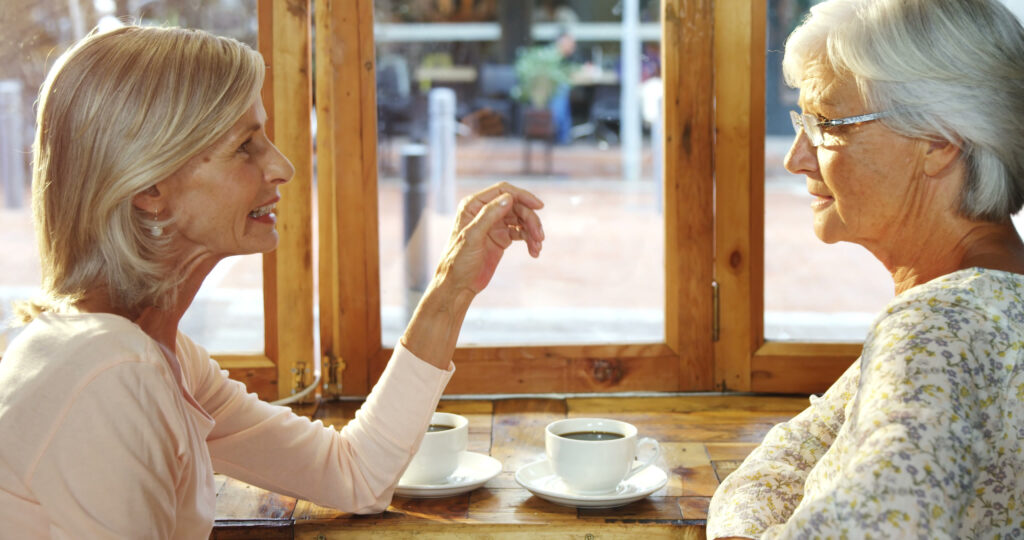
Begin with “micro-connections“
A smile, a hello, or a brief chat with the person at the post office, café, or bus stop might not seem like much — but it matters. These light daily interactions help rebuild social confidence and remind you how good it feels to connect. Let’s be honest, you’re at the mercy of the person you say ‘hello’ to. You might not get much back – if that’s the case, accept it, see it as part of the experience, and move on. But you may find someone who engages a little with you and is happy to have a little chat.
Go into it with no expectations. A simple “Hello, how’s your day going?” or any conversation starter of your choice may instigate a little chat that could add some light to both of your days. And remember, don’t be put off by those who give little back. It’s all part of the process – some people are more chatty than others. But persevere. Over time, with consistency, you may generate some meaningful and joyful conversations with others. These can start to build up, and, as they do, it is evidence to you that you are a social being who can connect with others.
Join something – not someone
Ooh, I like that heading! Let’s be honest, making new one-to-one friendships can feel daunting. You can become quite self-conscious, and it can put a bit of pressure on you. Instead, look for shared activities where friendship can grow naturally. You are looking to take part in something, with an offshoot of that hopefully being the natural development of connections over time. So what could you do then?
You can take a look at your local community – a simple Google followed by the type of club/class/activity you are looking for will yield some results for you. Here are some suggestions in the meantime, though.
Walking or Hiking Clubs – Gentle outdoor exercise, nature, and social interaction.
Book Clubs / Reading Groups – Stimulates the mind and encourages discussion.
Art Classes or Craft Groups – Painting, pottery, knitting, or other creative pursuits.
Gardening Clubs / Allotments – Combines mild physical activity with shared projects.
Volunteer Groups – Opportunities to give back while meeting like-minded people.
Cooking / Baking Classes – Learn new skills and enjoy social meals together.
Music or Choir Groups – Singing or learning an instrument improves mental and emotional well-being.
Bridge / Chess / Scrabble Clubs – Social games that keep the mind sharp.
Yoga or Pilates Classes – Gentle exercise that also supports flexibility and mindfulness.
Local History / Genealogy Societies – Explore hobbies while connecting with people with shared interests.
Walking Football or Bowling Clubs – Low-impact sports tailored for older adults.
Language or Culture Groups – Learning a new language or exploring culture fosters curiosity and social engagement.
I’ve also come across something today called the University of the Third Age (U3A). This looks really interesting, and as I look at their website, it makes me feel it’s worthy of its own, entire blog. Watch this space! From an initial look, the University of the Third Age (U3A) offers lifelong learning and social engagement for retirees. Members share skills and knowledge across interest-based groups—like languages, arts, or gardening—without exams. (Yay!) U3A promotes personal growth, mental stimulation, and social connection, helping older adults combat isolation and enjoy an active, fulfilling retirement. This looks great – I’ll be delving a lot deeper into that over the coming weeks and months.
Remember, whatever you decide to do, the key is to focus on the shared interest first. Connection follows naturally when you’re doing something enjoyable together, and other conversations will spark into life.
Use technology with purpose
Online life can feel overwhelming at times, but it can be a gateway to connection. One of the things I am finding from researching these blog posts is how much it’s opening my own mind up to the differing resources out there. There are organisations/initiatives I have just not come across before that are set up to help others – U3A is one example that I’m certainly going to delve deeper into. But there are more;
Rest less is a UK-based free online platform for people aged 50 and over. It offers job listings focused on age-diverse employers, financial advice and pension planning, leisure and lifestyle content, travel deals, events and social connections — all designed to support a fulfilling and active later life. Take a look – there’s a whole world of resources on there.
Meetup.com is a platform where people create or join local groups and events based on interests — from hiking and book clubs to fitness and networking. The aim is to connect like-minded individuals and facilitate meaningful in-person or online meetups. This site is suitable for all ages, but also definitely caters for those aged 50 plus.
The Oddfellows is a UK-based not-for-profit friendly society whose core purpose is bringing people together through friendship and mutual support. It runs hundreds of local events (online and in-person), offers care and welfare benefits, and encourages volunteering and social involvement — all built around shared connection and wellbeing.
Stich is an online and in-person social community for adults aged 50+. It enables members to join interest groups, attend local events or virtual meetups, connect for friendship, travel or companionship, and engage safely with verified peers. Its goal is to combat loneliness and enrich life through meaningful social connections.
Re‑engage is a UK charity dedicated to reducing loneliness and social isolation among older people (primarily aged 75+). They run free monthly tea parties, telephone befriending (“Call Companions”), online/face-to-face activity groups and other services to help older adults connect, be valued, and enjoy social life.
This is so good. For want of repeating myself, I’m so pleased to have found some of these resources that are out there. Prior to writing this post, I didn’t have the first idea that this choice was available for people, so I feel blessed that it’s all out there. It’s incredible, really, how much we just don’t know. If you are reading this post and feel that any of these services could benefit someone you know, please do share with them.
Let pets do the introductions
Pets are natural ice-breakers, and also good companionship to have. This article from Campaign to End Loneliness highlights how animals—especially pets—play a powerful role in reducing loneliness and boosting wellbeing. It explains that owning a pet fosters purpose and companionship, lowers stress, reduces blood pressure and heart rate, promotes physical activity (like dog‑walking) and encourages social interaction. All the good things in life there!
With pets, people experience improved mood, increased resilience and greater motivation to engage with others. The piece also notes that during the pandemic, many people adopted pets to fill emotional gaps, and that charities are working to connect lonely people with animals as a means to enhance mental health and reduce isolation.
Dog walking groups, pet-friendly meetups, or volunteering with animal charities can connect you with like-minded people. If you don’t have a pet, borrow one through community schemes like Borrowmydoggy.
Borrowmydoggy, I hear you cry! Now what is that all about? Being a borrower on BorrowMyDoggy means joining a vetted community of dog‑lovers who look after local dogs for love, not payment. You browse nearby dog‑owners’ profiles, message to arrange a meet‑up, and then enjoy dog‑walks, cuddles, or even stay‑overs. The benefits are many: you get the joy and companionship of a dog without full‑time ownership, you boost your physical and mental well-being (more walks, lower stress), and you build connections in your local community. Another wonderful initiative that is out there to help improve the quality of our lives. Brilliant.
As we can see, there is a lot of choice out there. And of course, there will be more that I have yet to discover that hasn’t made its way into this blog post. I will keep hunting, and will add more as the months and years go by onto this website. Suffice to say, in the meantime, hopefully the above are some good starters for ten for you.
Building Confidence Again.
I understand it’s one thing to know there is a lot of choice out there in how we can spend our time and connect with others, but what about if we’ve been out of the social game for a bit? You might understandably feel a bit rusty, a little low on self-esteem. You might feel out of practice or even worry about whether you will fit in. Here are a few gentle reminders on how you can build a little confidence again:
Be curious, not perfect. People love talking about their interests. Ask questions and listen — connection grows from curiosity. If I’m honest, for me, this is the single most important skill I have learned, which has made me feel so much more comfortable in social situations over the years. I used to think I had to do all the hard work – all the talking. Wow, how I have changed my perspective on that! My approach now is to sit back, show interest in others, genuine interest, of course, then let them do the talking. It’s a win-win. I get to learn new things about others whilst sitting back and listening. I’m not saying I’m like this all the time – get me onto the subject of hip hop or Birmingham City FC and you’ll likely not be able to shut me up – but a lot of the time I try to learn about others and let them carry the conversation forward. I find it so much easier. Try it, and see how it works for you.
Don’t chase popularity. One or two close friends bring far more joy than a long contact list. How true is this? Does it really matter if we have 10, 100 or 1000 friends? It has to be the quality of the friendship that is the most important thing. I would class myself as a person who doesn’t have too many social contacts, but the ones I have are deeply important to me, and they are the ones I will continue to nurture. Keeping 1000 friends happy also sounds far too stressful and also downright impossible!
Let go of old scripts. You don’t have to be the “life of the party.” Warmth, humour, and authenticity are what people connect with most. Being your true self, showing empathy to others, and showing interest in others (as we touched on above), to me, sounds so much easier than trying to be the life and sole. Be who you are – I know it’s a phrase we hear a lot of, but it’s so true.
If social anxiety creeps in, remember that most people are too busy worrying about themselves to judge anyone else. I really do believe this to be true, and studies show much we are consumed in our own heads for so much of our waking hours. And if others are thinking negatively about us, let them. Who are they to have the over-riding opinion on who you are as a person? You are who you are, and somebody else’s opinion on the matter doesn’t mean you need to change. Hey, maybe, and here’s a thought, it’s them that needs to change. Just an idea.

A Few Final Words.
In retirement, we often rediscover ourselves — our interests, our values, our joy. But rediscovering others is just as important. It’s never too late to laugh again, to share stories, to sit across from someone and feel that spark of belonging. Friendship doesn’t have an age limit — only an open heart and the willingness and confidence to go out there and show others all that you are. You have so many stories to share (you will have, even if you doubt it), you can make others chuckle or outright belly laugh (you can, even if you doubt it), and you can be curious and show interest in others with the minimum of fuss (you can, even…you know the rest!). My point is, I believe we’ve all got it within us to be social creatures. Yours may be a little hidden, but with a little work, it can re-emerge to the surface. So start small, stay hopeful, and remember: even one genuine connection can change your whole outlook on life.
I hope this blog has shown the importance of why connecting with others is important, and has hopefully given you a few ideas on how you might approach this. And remember, there is so much more out there than one blog post can do justice to. Have a Google yourself – perhaps search ‘community programmes‘ in your area or ‘companionship services for retirees‘ just to see what comes up. I’ve learnt so much in this post, and I was the one who wrote it!!
And if you do find any websites that look promising, or you have tried some yourself before, please add into the comments below. This website is about us all working together to help each other out, so anything you find that could benefit others, please do share. It could make such a difference to someone’s life. Thank you for reading.