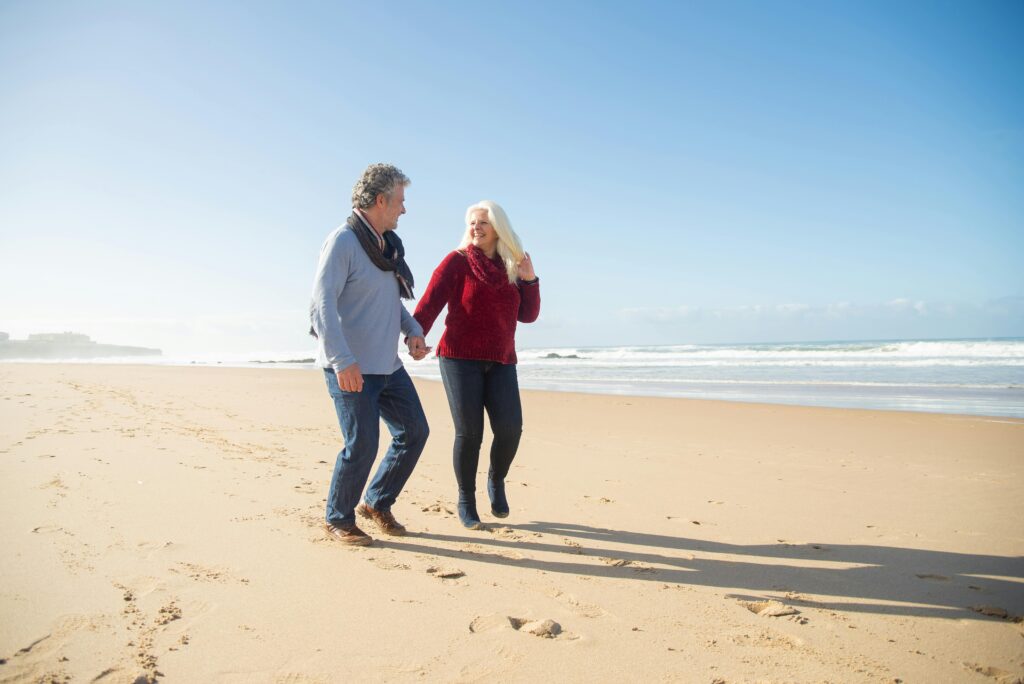
As retirement becomes a longer and more complex chapter of life, many couples are discovering that this new freedom also brings new challenges. Recent UK divorce trends highlight the importance of staying connected during this transition. While overall divorce rates have fallen in the past two decades, separations amongst adults aged 60 and over have risen sharply, with the number of later-life divorces doubling since the early 1990s. Today, around 3 in 10 divorces involve someone over 50, and projections suggest this may increase further.
These shifts signal a simple truth: thriving in retirement isn’t just about good finances, important though that is. It’s also about nurturing, harmony, good communication and having a shared purpose. In this post, we will explore practical ways couples can plan and adapt as they navigate retirement together.
Why planning as a couple matters
Retirement changes the structure of your days. An obvious statement, of course, but one worth reminding ourselves. Research shows that retirement can affect each partner differently — sometimes improving one partner’s wellbeing while leaving the other struggling — and those spillover effects matter for couple wellbeing. Thinking and planning together before retirement reduces surprises and helps both partners feel valued.
Financial expectations are another big issue. Everyone’s circumstances around money are different, but for all entering retirement, the financial landscape will inevitably change. Clear conversations about income, pensions, savings and spending help ensure both partners feel involved in decisions that shape their future. Let’s face it, if important matters such as this are not talked about and shared, you can understand why misunderstandings and indeed disagreements could build. When couples approach money together, it helps strengthen trust and create a stable foundation for a happier, more connected retirement.
Finally, retirement isn’t one-size-fits-all. Some couples will want to spend almost all their time together; others thrive when they have strong separate interests. Recent advice guides emphasise that couples who plan how they’ll spend time and space together — and who deliberately create boundaries and solo time — report a smoother transition. That all makes sense to me. It’s a balance. Try and develop (if you don’t have them already) shared interests, but also take part in your own hobbies and pursuits. The best of both worlds, so to speak.
Okay then. Time to look at some practical ways to help couples navigate their retirement years in a harmonious (I know it won’t always be harmonious – I am a realist – but let’s make it as harmonious as possible!) manner.

Conversations – both pre- and during retirement. Just talk!
I know it’s not rocket science to say this, but planning together really can be pretty simple. Just talk – that’s it. Talk! I appreciate that communication channels in all partnerships are not always strong – that’s just the way of life – but if you have a decent enough quality marriage, then being able to chat things through with each other should be a given.
Pre-retirement conversations shouldn’t be a one-off. Start several years before retirement to discuss money, health, social life, what each of you expects day-to-day, and how you want to spend your time. I’m currently 52 at the time of writing this post, and my wife is 49. I don’t intend to retire until my late 60s, so quite some time ahead. Already we are talking about things we will do in retirement, such as volunteering, travelling and copious amounts of walking. The plans are already in force – shame I’ve got to wait nearly two decades to get there! Early discussions can let you brainstorm what a good retirement might look like for you both, and help you iron out any possible conflict in the months/years ahead. Consider using gentle, curiosity-driven questions: “What would a good day in retirement look like for you?” or “Are there things you want to try that we haven’t had time for?”
People who prepare together tend to be less stressed by the retirement transition and more likely to coordinate financial and lifestyle choices effectively. It means you go into retirement with ideas, with a vision, of what it might look like. It likely won’t play out exactly as you intend – you will adapt and change as time passes – but it’s better to go into ‘day 1’ of retirement having some joined-up ideas of what the time ahead will look like for you.
Get yourselves ready – it’s quote time.
“The quality of your communication determines the quality of your relationship.” – Anthony Robbins
A grand statement there, but definitely there’s something in it. How we converse with each other is so important, and we have a choice in how we do this. We have the gift of producing and saying a bunch of words to anyone we meet – let’s make them good ones.
Talk about roles and chores before they become friction
Sticking with the conversational theme, talking about who will do what from a household chore perspective, boring though it sounds, can be useful. We can’t escape it – bathrooms need to be cleaned, running the vacuum cleaner around is a must, bills need to be paid – life does pop an awful lot of chores onto our doorstep.
Work often masked our structured tasks (e.g., one partner handled bills, the other the gardening). You will have fitted these around your work commitments, and over time, got into the habit of carrying out your respective tasks. Retirement redistributes the household workload. Talk about who will do what, and be ready to renegotiate. Turning chores into a conversation rather than a complaint can avoid long-term resentment.
I appreciate that chores are only a fairly small element of how we spend our time, but they can cause resentment. If one person feels they are doing far more than the other, this can cause frustration and arguments. Life’s too short. Just have a chat, decide who does what. Mix it up each week if you want – you vacuum one week, your partner does it the next – variety is the spice of life, as they say. But just a little planning and honest conversation can help avoid friction and mean your other half isn’t giving you the silent treatment because they’ve had to put the bins out for the past three months.

Building a balanced retirement life
A healthy retirement should balance shared activities with individual pursuits. Let’s face it, we are our own individuals, so we should have our own hobbies that we pursue, whether on our own or with friends. This is healthy for us and helps with our own mental health.
But it’s also important, if you are a couple, to do things together. Having shared interests is a good thing. It can help strengthen bonds between you, give you nice shared experiences together, and create good conversations after you have undertaken your shared venture. You may already have cultivated some shared interests prior to retirement, and if you haven’t, no bother; it’s never too late to start. Here are a few ideas from an article I came across today.
It’s important to strike that balance. Cultivating your own personal hobbies is important. It’s good for your own self-esteem. I would imagine it would be difficult for a partner to see their other half leading a full, active and highly social retirement whilst the other individual does very little. Do you own thing, build your own interests, but also spend time together. It really is the best of both worlds.
Keep dating each other
I know it can sound a little ‘cheesy’ to say something like this (or maybe it doesn’t), but try and hark back to the days when you first got together. I would imagine that you went to different places, perhaps different eateries, experimented with activites to see what you both liked. Good times. Then of course, life comes along, smacks you across the head and says, ‘Right, for the next 20-30 years, stop doing all these nice things and crack on with the graft’. I’m exaggerating a little, but hopefully you get my point.
Make time for yourselves again. Small rituals can build intimacy: regular date nights (they can be simple), surprise notes, or trying a new activity together. I’m adamant that we have so many choices out there in what we can do – and most of us (myself included) will only touch the surface of all that is available to us. Try different things to keep that spark alive in your retirement years. You could learn something new as a pair, plan small adventures or getaways, or give back by volunteering. The important thing is to be intentional in making sure time is set aside (whether it be routine or ad-hoc) to do things together.

Negotiating differences and conflict
Okay, let’s not kid ourselves. We are only human after all. As much as we can, and should, strive to minimise conflict with our significant other, we have to be real. Spending so much more time together than you may have been used to is inevitably going to cause a few disruptions every now and again. That’s okay. Accept that’s all part of it. The trick, of course, is to try and keep this infrequent, and when it does happen, look at ways of getting back on the straight and narrow.
So, what can we do to help keep a sense of harmony going?
- As touched on above, accept there will be some friction – it’s normal. Retirement is a major shift – it really is. Two people suddenly sharing more space and time naturally creates friction. Try and normalise this. Look at it from the viewpoint that you are adjusting; you are learning how to negotiate a phase of life that is new to you. Like with all other aspects of life, no training manual is given to you – you have to learn on the job, even though you don’t have a job anymore! As ever, it’s all about mindset and how you think about things.
- Set boundaries around family involvement. Retirees often get pulled into grandchild care, family dramas and supporting adult children. This is a good thing – keeping involved in family matters and helping out contributes to purpose and makes you feel valued. But look to set boundaries – discuss what you are willing to do, to what degree, and what might cross a line. Again, this is only achieved by discussion. Talk things through and design this part of your life in the way that suits.
- Schedule check-in chats. Maybe the word check-in makes it sound a little formal, but consider putting aside, say, 20-30 minutes each week, and converse about what might have gone well in the past week, what might have left you feeling a little frustrated, and whether any changes are needed. Pick your own questions, but there’s no harm in having a conversation around how things are going. We talk about so many things in life by habit, the weather (that’s a UK thing), food, our jobs, news perhaps, how good hip hop was in the late eighties and early nineties (that might just be me, actually), but how often do we talk about how well we are coping with our responsiblities and how we spend our time in life? I feel we could probably do that a little more.
- Sometimes, you might need to consider a third party, such as a coach or mediator. There’s nothing wrong with that. An outside influence can make us see things in a different manner, and they, of course, don’t have the emotional aspect tied into things as they are not living your life. They could suggest ideas that you have just never considered. Other people’s perspectives are a good thing. You can pick and choose what you take from them. You don’t have to agree with all of their suggestions; maybe see it as a pick and mix. Take what you feel could be worth incorporating into your life, and leave other suggestions out. It’s your choice. But sometimes the ideas of others can prove fruitful – a different perspective that can offer benefits to you.
What’s that I hear you ask – a quote? Oh, go on then – why the heck not.
“People will forget what you said, people will forget what you did, but people will never forget how you made them feel.” – Maya Angelou.
I like that one. I do hope that a few of the people in my life don’t completely forget all I said and did in life, but I do like the sentiment! Make other people feel good. Why not.
Social connections, friendships and community
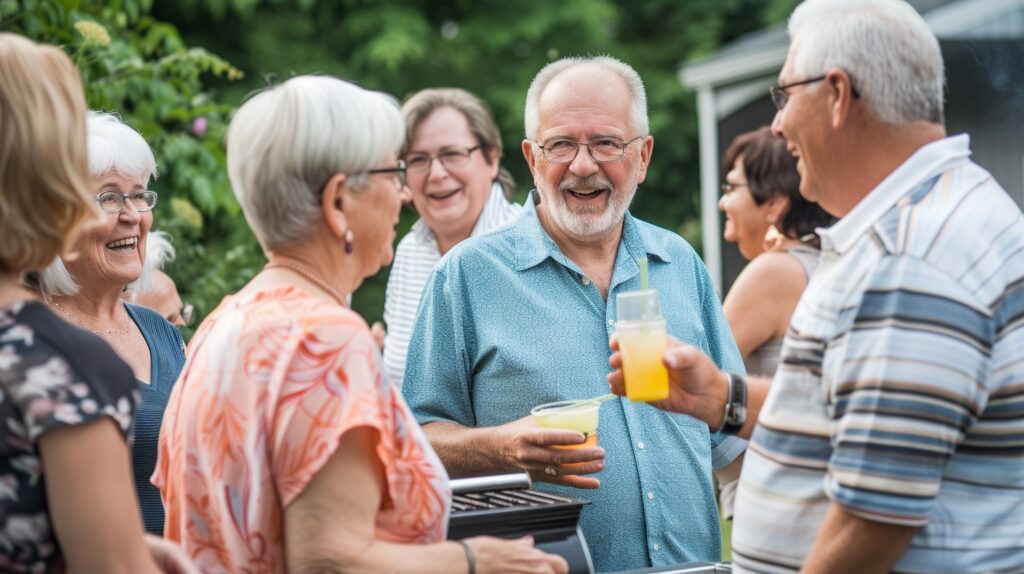
Retirement changes the rhythm of daily life, often in liberating ways—but it can also shrink the natural social circles that work or parenting once provided. This makes social connection in retirement not just a “nice to have,” but a foundation for good well-being and long-term happiness. Friends, community ties, and shared activities provide structure, meaning, and emotional nourishment at a stage of life where staying connected matters more than ever.
Strong social relationships have been shown to boost mental health, improve cognitive function, and even contribute to physical longevity. But beyond the science, friendships in retirement offer something deeply human: companionship, laughter, and a sense of belonging. Whether it’s the friend who joins you for a weekly walk, the neighbour who becomes a trusted confidant, or the new acquaintance you meet at a local class, these bonds create a network of support that makes life richer and more enjoyable. We are social creatures after all. I’m sure most of us, when we reflect on the good moments of our lives, will look back at those times we spent with others as being some of our fonder memories. Better than doing the dishes and washing the car for sure.
One powerful shift in retirement is the freedom to choose relationships and communities that genuinely align with your interests and values. You’re no longer limited to colleagues or school-gate connections. Want to join a local walking group? Volunteer for a charity that matters to you? Take up dancing, join a book club, or start a gardening circle? The choice completely lies with you. Retirement offers the time and flexibility to explore, and every new activity creates opportunities for meaningful friendships to bloom.
For couples, maintaining friendships and community outside the relationship is equally vital. It allows each partner to retain individuality, have fresh experiences, and bring new energy back into the relationship. A healthy balance of time together and time spent with friends supports independence while strengthening the couple’s bond. This really is a key message in this post. Living our own life and nurturing our own interests is vital – this helps us become the best version of ourselves that we can. But equally as important is maintaining that bond with your partner and ensuring your relationship continues to thrive. It’s a balancing act, but one that is more than achievable.
Ultimately, social connection in retirement isn’t accidental—it’s intentional. It requires openness, curiosity, and sometimes a little courage to step outside the familiar. But the reward—a life filled with companionship, support, laughter, and meaning—in my mind, is well worth the effort.

Final thoughts
Retirement is a major life transition, and like any transition, it works best when approached with intention, communication, and compassion. While every couple’s journey will look different, the path to navigating retirement together is built on the same foundations: honest conversations, shared planning, respect for each other’s individuality, and a willingness to adapt as life continues to unfold.
What matters most is recognising that retirement is an opportunity—a chance to redesign your lifestyle as a couple, rediscover each other beyond the roles you once played, and build a rhythm that supports both togetherness and personal fulfilment. By staying curious about each other, making space for new experiences, and embracing inevitable challenges with patience, couples can not only avoid conflict but also deepen their bond in ways that feel rewarding and life-affirming.
You don’t need to have everything figured out from day one. I mean, who really does? Start with small conversations, check in regularly, and treat the process as a partnership. The goal isn’t perfection—it’s connection, clarity, and confidence in the future you’re creating together.
As ever, one of my desires for this website is to encourage discussion, so please do comment below about how you are navigating retirement as a couple, perhaps sharing any challenges you have faced or are currently facing. Perhaps you have tips and ideas on how you have overcome your own adversities – please do share them. I will engage with all that leave comments, as interaction to me is hugely important.
Thank you for your time. I’m off now to chat to my wife about how good hip-hop was in the late eighties into the early nineties. I imagine I will need to re-read my ‘negotiating differences and conflict’ section of this post in the next 10 to 15 minutes.