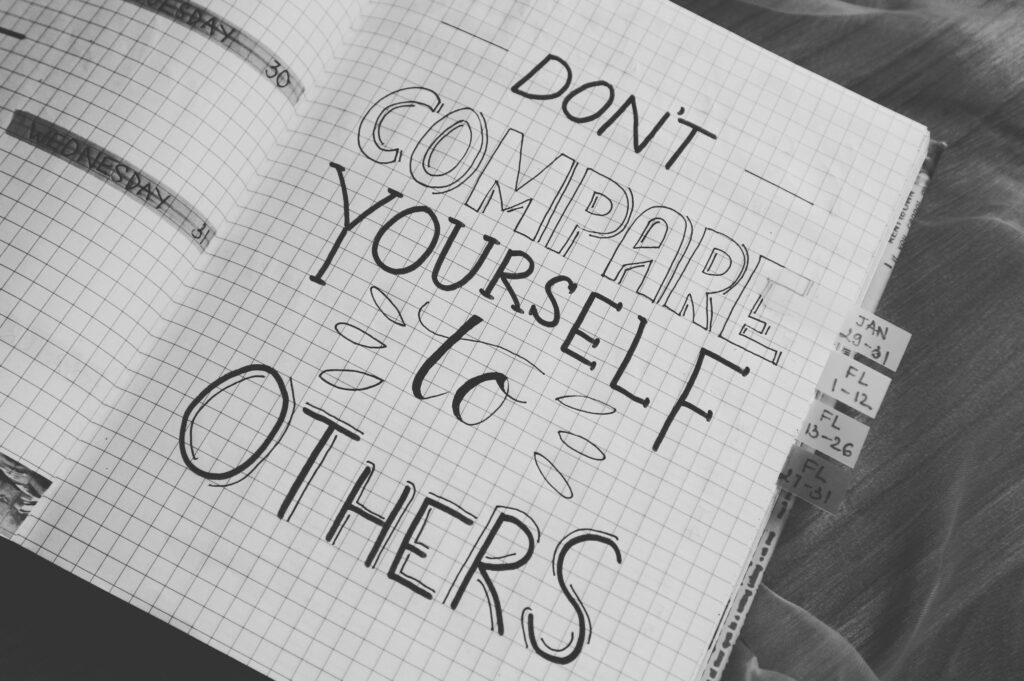
So it seems that the above picture is giving you a good idea about my views on this particular topic. Straight to the point. No messing. The trouble is, we all do it, myself included. We’ll explore in this post why we desire comparing ourselves to our fellow humans, with a special focus on our retirement years, of course, and then look at ways we can think more healthily and kick this comparison lark into touch.
Retirement should be a time for freedom, a time to live our best years with full vigour. For some retirees, though, it can become a period marked by comparison, which in turn can sap our energy and, even worse, start to impact our self-esteem. How can George and his wife afford to go on so many holidays, we might ask ourselves? How did they afford a camper van? Why is George always holding lavish parties, inviting all and sundry? How does George keep himself looking so trim and fit? Tell you something, if I cross paths with this George, I’m going to suggest he sticks his idealist life where the sun doesn’t shine!
I’m joking, of course. I’ve just made George up, therefore I’ll never meet him! But there’s a serious point here. We do have a habit of comparing ourselves to others, whether it be how we look, our house, who has the better car, who has the most fun, and so on. So why do we compare ourselves to others? Let’s see if Wikipedia can help us out.
Social comparison bias
Social comparison bias is a cognitive bias where people feel dislike, envy, or competitiveness toward others they see as superior in ability, status, or attributes. It stems from the broader idea that individuals often judge their own worth by comparing themselves to others — a concept first proposed by psychologist Leon Festinger. These comparisons can be upward (to someone better off) or downward (to someone worse off), and they influence emotions, motivation, and self-esteem. This is hard-wired within us, and helps us to see where we ‘sit’ within a group. There can be positives with this, of course. If we compare ourselves to those who we perceive to be better than us (and I use the word perceive purposely there – do we always truly know someone is better?), this could motivate us to improve, to push ourselves, to become a better version of ourselves. And conversely, if we compare ourselves to someone worse off, it can make us feel better.
But there can also be downsides to this. If we continually try to keep up with the Joneses (not sure who is worse – the Joneses or George – I’ll leave that one with you), then it can become unhealthy and could start to affect how content you are in life. Retirement can be idealised a lot – glossy brochures advertising luxury holidays, morning yoga on the beach, friends bragging about their latest milestones – all of this seeping into your headspace could start to impact what you think about yourself. You could start to feel a little left behind. Before we look at how we can deal with this, and I promise you that’s on its way, let’s look at some of the science first about the mental health implications social comparison might have. I do this to show there is a negative impact there, in the hope that it drives you to banish all thoughts about George having recently bought himself a new yacht – his second this year. And it’s a bigger one too. And made of gold. Bloomin George!
What Science and News Say About Comparison
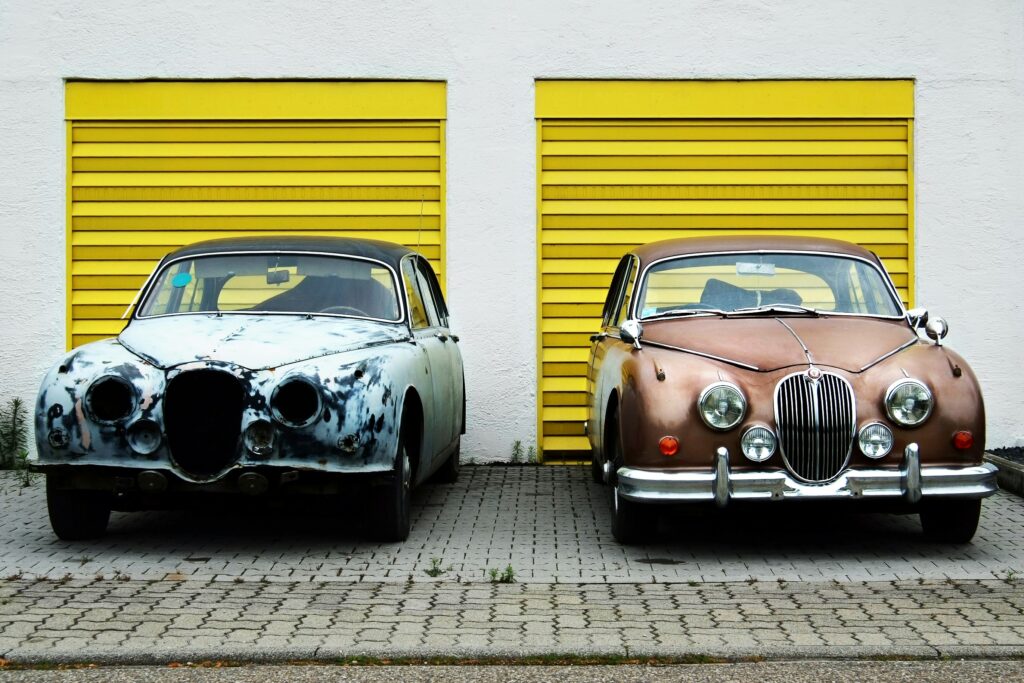
One on the right for me, I think. Although the one on the left has a sort of rustic charm. Mmm, I just don’t know.
1. Social Comparison Can Impact Mental Health
I’ve touched on Leon Festinger’s studies earlier in this post. This article looks at the impact that comparison can have on our mental health. The article explains that constantly comparing ourselves to others — especially through social media — can undermine self-esteem and create feelings of inadequacy, stress, and reduced motivation. Drawing on social comparison theory, as discussed above, it describes upward comparisons (to those we admire) and downward comparisons (to those worse off), both of which can have mixed effects. The piece stresses the importance of self-compassion — treating yourself with kindness and understanding — as a healthier alternative to self-criticism. By shifting focus from competitive comparisons to compassionate self-care, people can improve their self-worth, emotional resilience, and personal growth. What we’re saying here is that a choice can be made in where we direct our mental energy. We don’t always see it that way, but we do have a choice.
2. Economics and Visible Lifestyles Can Fuel Comparison
When we compare ourselves to others, it seems that money is one factor we quite happily (or perhaps not quite happily) use to assess ourselves. Research from UC Berkeley found that people tend to overestimate how much their peers spend and earn, leading to assumptions about “the norm” that can reduce saving and create anxiety about retirement readiness. In other words, when retirees see others spending freely or living in fancy retirement destinations — whether online or in real life — they may feel pressured to pursue similar lifestyles, even if those don’t align with their own values or financial priorities.
This really is food for thought, isn’t it? We pressure ourselves to do things that others do, even if they don’t meet our own priorities or values. It seems illogical to me. Why don’t we do what is right for us, rather than trying to get one over somebody else? I would be interested in your views on this, whether you agree or disagree, so please do comment at the end of this article. And don’t try to compete with others over who has the best comment. I know George comes by this website every now and again, and his comments are totally awesome. You’ve got no chance of beating him, so I wouldn’t even try!

How to Break Free from the Comparison Trap
Okay, so we recognise that comparing ourselves against others is something we might do. We have also established that there are negative aspects to this. It can lower our self-esteem and create feelings of inadequacy and stress. I think most of us will agree that feelings such as these would be nice to avoid. Okay then, let’s look at what we can do to break free from this comparison trap.
Notice When You’re Making the Comparison
Sounds obvious, doesn’t it? Become aware of when we’re doing it. But is that always the case? Sometimes our brains work on autopilot, and we’re thinking things, but we don’t necessarily have full awareness of what we are thinking. Very natural. So the first step is to develop that awareness. When you find yourself thinking, “They’re living a better retirement than I am” pause and reflect:
- What exactly are you comparing?
- Is this based on complete information?
- What expectations are you trying to meet?
Consider what is making their retirement better. Is it because they have a better car? Is it because they have more holidays? Is it because they do more things? If so, why are these aspects of their life making things better for them? You might think to yourself that having more holidays must mean they are having a better time, but as we mentioned above, do you have the complete information here? Who knows, this fictional couple may go on holiday and argue all the time. You don’t know that, because they will never tell you, but it could be the case. Or when they’re not on holiday, they might be going through the motions in their retirement, plodding along, with no real purpose in life. This is what I mean when I talk about what you are comparing, and whether you have full information. Most people will only talk about the positives in their lives. If Rita and Bob go on 3 holidays a year, but are at each other’s throats most of the time, you won’t know about that aspect of their lives because it will likely be kept under wraps. The point I am trying to make is we rarely, if ever, know the full picture of other people’s lives. And also, I call into question, does someone who has a better house, car, holidays, etc, actually have a better life? If those are the metrics we compare ourselves over, is it worth considering changing the metrics? Gosh, lots of questions here. I always encourage comments and discussion, so please do add your thoughts at the bottom of this post if you have any views on this.
Set Your Own Meaningful Benchmarks
Rather than spend time and energy thinking about what Sylvia next door is up to, consider reframing your focus from the lifestyle of others onto your own life.
- What are your own values?
- What matters to you?
- What gives you a sense of contentment, joy and purpose?
Answers to these questions have nothing to do with Sylvia and her near-perfect garden. You are changing your thoughts to consider yourself. And you can do that. Allow thoughts of Sylvia and her prized begonia to enter your head, but then add in your own thoughts about what is important to you.
Think about what you enjoy spending time doing, and do more of it. Reflect on what your own values are. Is it to help others? If so, bring this into your life, or more of it. Is it to develop a hobby that’s always been in your headspace to begin? If so, do it. Here you are bringing the focus onto you, and how you can bring more value into your life. By doing that, your brain has less time to focus on Sylvia and her neatly manicured lawn that has the lovely stripes that make all the neighbours jealous. They are, after all, just stripes.
Reduce Unhelpful Triggers
Social media. Social media. Social media. There, think I’ve said all I need to there. Reduce social media.
Okay, social media can be a force for good, and if you use it in a positive manner, then all is well and good. Keep it up. But if your use of social media makes you feel inadequate or unsettled, perhaps due to the portrayal of idyllic lives that others like to show off – sorry, share, then perhaps consider reducing your exposure to it. Remember, there was a time when social media didn’t exist – we found other ways to occupy our time then. Most online content is curated to show the best moments. Very few people will post pictures of their cat accidentally doing its business on the settee, whilst the parents are running around stressed cos little Billy left his sports kit at school, whilst his older sister moans about life being rubbish. We don’t get to see these things, but by gum, they happen. Not at George’s house of course – no, not there. Their cat dishes out golden plops when he does his business. Perfect George!
Engage in activities that make you feel good. If you feel good, you think good thoughts. If you think feel-good thoughts and continue to engage in activities that stimulate you, you create more feel-good feelings. And so the cycle continues. It’s that simple. Finding the activities that motivate you can be a challenge, but other posts on my blog will hopefully help you out with that.
Practice Gratitude for Your Own Journey
We hear a lot about gratitude. And I think, rightly so. The important thing with gratitude is to practice it, to live your life by it. It really is a powerful tool, as over time, it can shift your mindset. It certainly has for me. You may laugh at this, but I’m grateful now for so many of the things a lot of us take for granted. Supermarkets – if I want food, I can go and get it. Water – our house has taps. If I’m thirsty, a glass of water is 10 steps away. Walking – it’s free. If I want to walk, I can. Nobody there stopping me. Ability to converse with others – yep, I’ve got a mouth and a brain, so I can have good conversations with people. And so much more.
Consider a daily practice of gratitude, whether you journal the things you appreciate in life, or, like me, say them out loud to yourself. This can help strengthen your resilience and reduce any thoughts of comparing yourself to others you may have. Again, it’s just training your brain to think of the aspects of life that empower you. The more you do it, the more natural it becomes, and the easier it gets. And over time, you become that person who is grateful for so many things. It’s a nice thing, believe me. Be grateful for what you have, what you have achieved, but know you can always grow in life.
Cultivate supporting relationships
Okay, so basically, here, just make sure you stay away from show-off George. “Yes George. We know. Your garage is the tidiest in the neighbourhood – well done to you!”
I really am painting George to be quite an unpleasant figure here. It’s a good job he’s fictional, isn’t it- or is he?!
Surround yourself in life with people who uplift — not compete with — you. Genuine friendships and community connections remind you that life isn’t a contest, but a shared experience full of unique paths.
Engaging in retirement groups, volunteering, or hobbies can help you connect with others in ways that reinforce support rather than comparison.
Life shouldn’t be a race to the finish line. It shouldn’t be about who has got more, or who has perceivably better things. It really is immaterial. Life should be about cultivating good self-esteem to be as happy as we can. Surrounding ourselves with positive people, those with similar values to us is what we should be doing. There’s a lot of negativity in our world, sadly. But also positivity, too. It’s our choice who we spend time with. Find like-minded people whose company you enjoy. They are out there – we just sometimes need to seek a little harder to find them.

Conclusion — Your Retirement, Your Story
Comparing your retirement to others is an understandable habit — but it’s one that often steals joy and distracts you from what really matters: living your life in a way that reflects your values, aspirations, and rhythm.
By becoming aware of comparison triggers, setting your own goals, and nurturing self-acceptance, you can gradually let go of unhelpful comparisons and experience more contentment, connection, and peace in your retirement years. After all, who wouldn’t want that?
Remember: your journey is unique — and that’s your strength. Not Sylvia’s journey, nor Dave’s, nor Graham’s, nor Tom’s, nor Denise’s, nor…you get the picture. Their life is their life, not yours. You have your own unique life, which, to the greater part, you can control. You can’t control other people. Therefore, put your energy into yourself. That you can control.
Right, I’m off now to see my good pal George. He’s just completed a 1000-piece jigsaw in 4 and a half minutes and is keen to tell me about it. Mmm, think I might take my headphones with me and load up Spotify.
Thanks again for reading.