
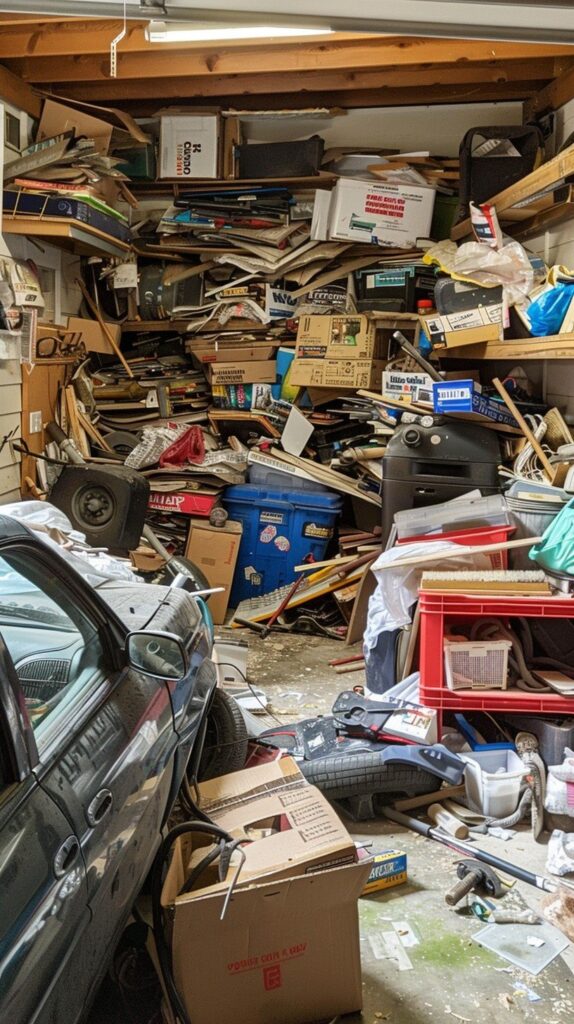
Okay, here we go. It’s time to let our hair down a bit. I talk a lot on this website about important matters: identity, purpose, meaning, social connections and more. Vital stuff, of course. But every now and again, I feel the urge to lighten things up a little. After all, we need to strike that balance in life. Yes, let’s work on our well-being in retirement, but let’s have some fun along the way.
Welcome, therefore, to a post which is essentially about tidying up. That’s it – nothing more – tidying up! Stick with me. I have found some pretty wacky stories across this worldwide web that have opened my eyes up to the approaches some people take to sort out their clutter. Pull up a chair, grab yourself a cuppa as we take a look at some of the wacky and funny ways people have tried to de-clutter their lives.

The Konmari Method
Researching for this website really does open my eyes sometimes. To me, if I want a declutter, I look at what I want to keep, what I’m happy to throw, and crack on with it. Simple. Some people, it seems, put a little more thought into it.
Take Marie Kondo. She created the KonMari method. This method is an organising approach based on gathering all belongings by category—not by room—and keeping only the items that “spark joy”. Kondo encourages people to begin by decisively discarding anything that does not create this joyful feeling. This process, she says, not only clears clutter but helps individuals understand themselves better by recognising the role each item has played in their lives.
KonMari follows a fixed order: clothes first, then books, papers, miscellaneous items, and finally sentimental objects. For each category, everything is collected in one place, assessed, and only the joy-sparking items are kept. Another key principle is assigning a specific home for every item and ensuring it is always returned there.
I guess that makes sense. Does the object give you that nice, joyous feeling, or does it make you think happy thoughts when you look at it? A look at Marie’s website brings up a whole host of tidying-up information. I never even knew that you could create a website, and indeed, it seems, good success in life, just by picking something up and throwing it in the bin. This world is wacky. And if any of you have the desire, you can also complete a 10-lesson course on the KonMari method. And no, I do not earn any income if you decide to jump into this. I just gain the satisfaction of knowing that you have now categorised all your household items, and have left just those that leave you feeling joyous.
Okay, so that was our starter for ten. How bizarre can we take this? Well, pretty bizarre it seems.

The “Poop Rule” — when gross-out meets get-rid-of
Some folks take the “does it spark joy” question a step further, with a seriously pungent test. The so-called “Poop Rule” asks: If this item were covered in poop — would I still keep it? That’s right. You read that right. Apparently, it seems to be something that was gaining a trend on social media back in the summer when this article describing the poop rule was written.
Apparently, it’s a freeing way for people (especially those overwhelmed by clutter) to make quick decisions. One declutterer even admitted she suddenly dumped clothes she hadn’t worn in months and random board games she’d never played.
Are you thinking the same as me? If you haven’t worn clothes for several months, or have board games you’ve never played, do you really need to imagine them covered in ‘number 2’s’ to convince you to throw them out? I mean, why don’t you just say to yourself, ‘you know, I’m probably not going to wear those clothes anymore, or indeed play those board games, so I’ll just chuck them out.’ No poop needed.
And also, wouldn’t everything covered in the aforementioned be worthy of throwing out? I mean, I love all the sentimental toys we have in the loft from when our boys were babies, but believe me now, if they were covered in dog dollops, they’d be straight in the bin! No question. Sentimentality right out the window!
Nope, not one for me this one. Let’s move on and see what else we’ve got. And do remember, this post is being intentionally a little silly. We’re having a ‘keep the mood light’ day.
Treasure Hunt Declutter: finding the “hidden stuff”
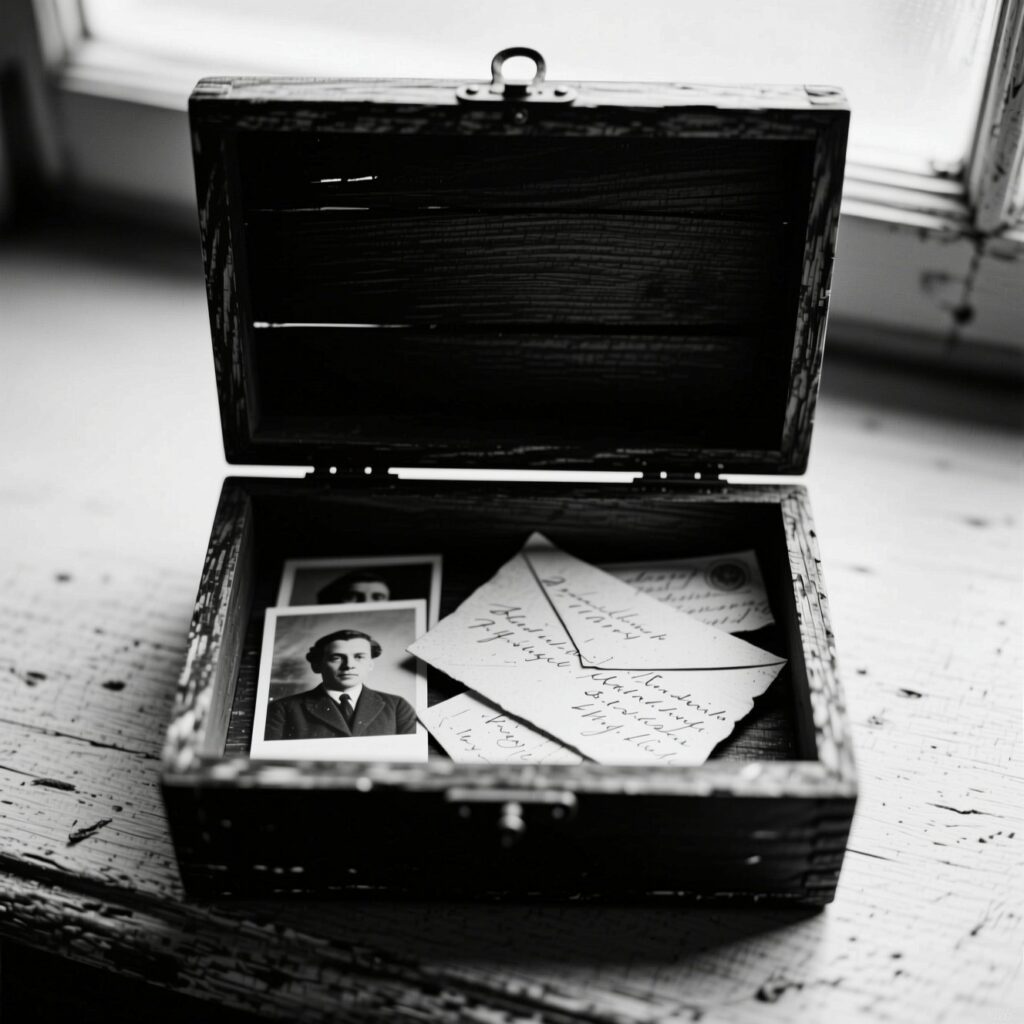
Late at night, while tackling a dreaded two-foot file box, a writer on Reddit unexpectedly uncovers a trove of family memories hidden among dull transcripts. The discovery is both humorous and emotional—a reminder of why decluttering matters: it lets the real treasures finally surface.
The star find is a large newspaper photo of Sister Lawrencia, the notoriously fearsome nun who terrorised every 4th grader. The writer vividly recalls her snapping a thick, metal-edged ruler over a boy’s head simply for hesitating on his times tables. Yet the newspaper image shows the same nun beaming with joy as she displays her crochet work at a senior hobby show, revealing a surprising softness never seen in the classroom. Two sides to every person, it seems.
The envelope holds more gems: childhood “get well” cards for a grandmother, random but cherished family photos, clippings featuring the writer’s father, and a picture of the writer herself as a Girl Scout proudly showing off drip candles. The final treasure is a 1969 school essay about the family dog, ending with the dry, revealing line: “He is an example of how superior our cat is.”
These rediscovered relics bring laughter, nostalgia, and the perfect reminder that decluttering isn’t just clearing space—it’s rediscovering pieces of ourselves.
Who knows what you might find in those areas of the house you seldom delve into? Yes, there may be a lot of throw-away items that can safely go (especially if they are covered in number 2’s and bring you no joy), but you might find that sentimental object/item that brings (hopefully positive) memories come flooding back. The only way to find out is to brave the clutter.

Why not try the 3-box method?
This one makes more sense to me, and as a bonus, no faeces involvement is required.
In the post “I Tried to Declutter Like a Minimalist Influencer – Here’s What Actually Happened”, the author describes their attempt to follow the minimalist lifestyle as promoted by social-media influencers — expecting a swift, satisfying purge of unwanted items and a serene, orderly home. If only life were so easy, eh!
What actually unfolded, though, was chaos. Instead of instant calm, the decluttering session felt like “emotional Tetris”: drawers full of redundant cables, obsolete gadgets, and physical clutter — along with a stash of sentimental items like old concert tickets, photos, and love-letter memories. Rather than being simple, the author describes confronting memories, deciding what truly mattered, and letting go of items tied to the past. Not always an easy thing to do. I’ve been there myself in life, for reasons I won’t go into now, but it can be a difficult process to go through.
At a turning point, the author adopted the “three-box method” (keep/donate/sell) to bring structure to the process. Seems straightforward enough. I think it’s the donate and sell aspect I like here. Some items will have value and will be worth the effort of trying to sell, whereas other items will be more applicable to donate. For the author, some items earned a place in a “memory box” — things worth keeping — while most other things were donated or discarded. In the end, the home wasn’t minimalist in an influencer-style, “Instagram-perfect” way — but it was lighter, more functional, and felt calmer.
The core message of this article, I believe, is that minimalism isn’t about perfection, but about keeping what you need — and letting go of what no longer serves you. Nice wash of realism under the glow of idealised decluttering.
The 7-Day “Stuff Cleanse”
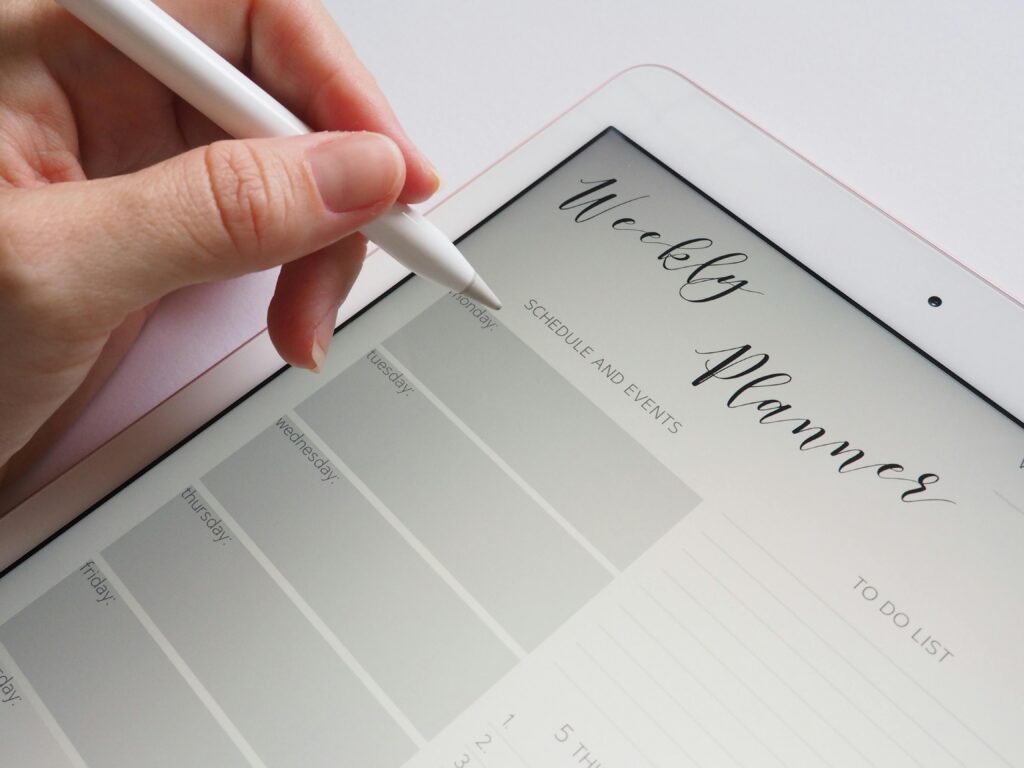
Another approach looks at a simple, manageable “7-day cleanse” approach to decluttering — a gentler alternative to overwhelming major clean-outs or strictly following intense minimalist trends. It encourages you to pick a “clutter hotspot” (the cupboard under our stairs ranks as number one in our house for that) and work on it for just one week. On day one, get rid of one item; day two, two items; day three, three items; and so on, so that by day seven you’ll have cleared away 28 items. Imagine doing that for a year. I think you could probably cancel your home contents insurance if that were the case.
This gradual method is effective because it builds momentum: you get a small but satisfying sense of accomplishment each day, which helps you avoid decision fatigue by tackling everything at once. I think you might also get the added advantage of thinking about what you are going to dispose of before you actually return to the task. Ideas are likely to flick through your head after you’ve thrown away item 1 on day 1.
Equally important is what you do with the items you purge. The article recommends removing discarded items from the home quickly — don’t let them sit in piles — and disposing of them responsibly. Good-condition clothes can be donated. Worn textiles might be sent to recycling or animal shelters. Outdated books or papers should go to paper recycling, and old electronics sent to an electronics-recycling point. Good advice.
Overall, this approach offers a realistic, low-pressure way to start decluttering. Instead of trying to do everything at once, it encourages small daily actions, steady progress, and a mindset shift. Simple, yet effective.

De-cluttered home – De-cluttered mind
Whilst this post is meant to be a tongue-in-cheek and light way of looking at, a quite frankly, dull chore in life, there is a serious message behind it. Research does show that having a tidy up can offer benefits to our well-being. This makes sense to me. How often do we turn around after a good clear out and pat ourselves on the back for a job well done? It does make us feel better – there’s no doubt about that.
Decluttering your living space can significantly benefit mental health by reducing stress, increasing feelings of calm, and giving you a greater sense of control. A tidy, organised home helps improve focus and productivity, since visual “noise” and distractions are removed. Decluttering can also boost self-esteem and support healthier relationships — you’re more likely to invite friends over when your space feels manageable and welcoming. For many people, clearing physical clutter leads to mental clarity and a simpler, calmer home environment.
Further evidence argues that clutter disrupts focus, overloads your brain with visual stimuli, and reduces memory and working capacity. Living in a messy or disorganised space is linked to higher rates of depression, anxiety, stress, and can trigger guilt, shame or hopelessness.
There has to be a positive somewhere with this, and there is.
In contrast, decluttering and organising your space tends to improve mood, increase self-worth, boost productivity and make you more relaxed. Less clutter frees up time, energy and mental bandwidth (no more searching for lost possessions), giving mental clarity, better sleep, and a calmer, more manageable living environment.
So a nice tidy-up session doesn’t just make the physical space you live in better, it aids certain aspects of your mental health too. A double win.

Final Thoughts
Okay, I’ll hold my hands up. My thoughts are that in all future articles I write, I will rarely ever get the opportunity to pop a picture of a poop on. So that’s why I’ve taken the opportunity on this one to add a second. You’ve got to grab the chance while you can, I say.
As I mentioned at the beginning of this post, I talk a lot about serious concepts on this website, such as purpose, identity and much more. This is for a reason – I believe they are hugely important, especially in retirement, to lead a fulfilling and happy life. But we need to approach these, what I believe to be serious aspects of life, with a sense of balance. So every now and again, I will lighten the mood by looking at the, shall we say, some wackier aspects of life. On that note, if you haven’t yet read my post about someone who converted their back garden into the wild west, maybe now’s the time to have a read!
Let’s work through the challenges that life throws at us, but let’s have some fun along the way. That’s the core approach I want to take in all I do with both this website and my podcast. We can become better versions of ourselves, whilst also having some laughs. Life’s too short.
Time for me now to clear out all that paperwork I’ve been meaning to dispose of over the last 20 years. My motivation levels have skyrocketed, not from writing this post, but from imagining my bank statement from 2008 being covered in…I’ll end it there, I think.